THE SPA TRAVELLER · PREMIUM SPA PROFILE
Discover the spa
Explore the treatments and practical details of East Sussex National Golf Resort and Spa. Check the latest availability, facilities and booking inclusions with the property.
Treatments
- Massage
- Facials
- Body treatments
- Pregnancy treatments
- Wellness treatments
- Rhassoul
- Couples bathing
Facilities
- Aromatherapy room
- Monsoon shower
- Sauna
- Steam room
- Jacuzzi
- Relaxation room
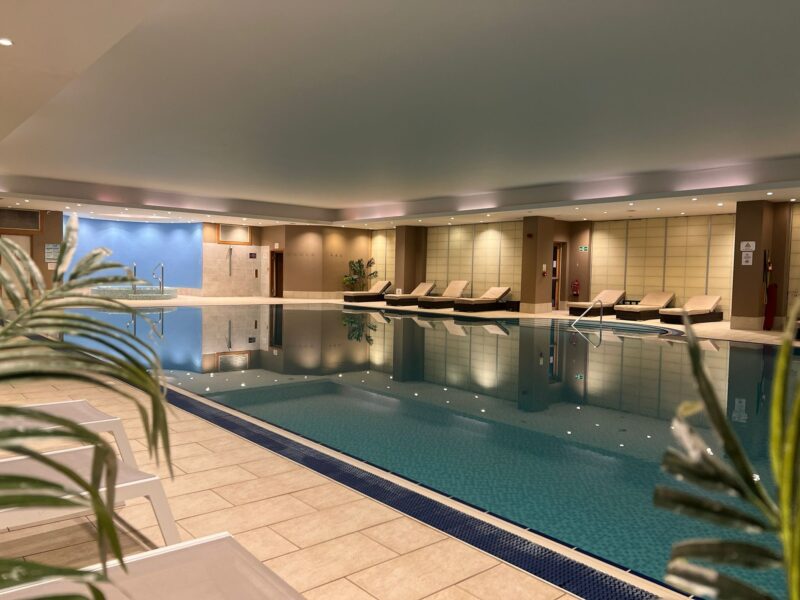
- 20-metre indoor swimming pool at health club
- Spa pool at health club
- Fitness gym
East Sussex National near Uckfield brings together two championship golf courses with Horsted Spa and a substantial health club, making it one of the more practical Spa & Golf resorts in the South East. The tournament East Course is a 7,081-yard stadium layout with European Open history, while Horsted Spa offers ESPA and VOYA treatments, a dedicated Golf Recovery Retreat, thermal facilities and access to a 20-metre indoor pool.
Spa & golf card
Location: Little Horsted, Uckfield, East Sussex TN22 5ES
Best for: Spa & Golf couples, serious golfers, South East weekend breaks, active recovery and two-course golf stays
Horsted Spa: Aromatherapy room, monsoon shower, sauna, steam room, Jacuzzi, relaxation room and optional Tranquility Lounge/Heat Experience
Health Club: 20-metre heated indoor swimming pool, spa pool and Life Fitness gym
Treatments: ESPA and VOYA facials, massage, body treatments, wellness experiences and Rhassoul
Golf-recovery option: Current Golf Recovery Retreat includes a 50-minute VOYA Golf Recovery Massage and a Rhassoul experience
Golf: East Course and West Course
Flagship guide: East Course — 7,081-yard stadium layout, par 72
West Course: par 72, 7,154 yards, with ancient oaks, pools and streams.
Why East Sussex National works for Spa & Golf
The resort is particularly useful for golfers who want more than a token hotel treatment after a round. Horsted Spa has actively built a golf-recovery package around massage, Rhassoul and health-club access, while the two courses are substantial enough to support a full weekend of golf. For couples, that creates a simple structure: one guest can play the East or West while another spends meaningful time in the spa, pool and relaxation areas.
The golf has genuine championship pedigree. The East Course hosted the European Open in 1993 and 1994 and has been used for other professional and qualifying events. The West Course provides a contrasting second round, winding through mature trees and around water. Together, they make the property more compelling for a two-night stay than a resort with only one course.
Horsted Spa
Horsted Spa describes itself as a calm, treatment-led environment rather than an enormous destination-spa complex. Current facilities include an aromatherapy room, monsoon shower, poolside Jacuzzi, steam room and sauna, plus a relaxation room. The Tranquility Lounge and Heat Experience can be added to certain treatment or health-club bookings, so visitors should check exactly what is included rather than assuming every treatment grants access to every facility.
The current treatment menu spans ESPA and VOYA facials, massage, body treatments, pregnancy treatments and broader wellness experiences. Rhassoul and bathing-style experiences give couples or friends an option beyond a standard therapist-led massage. The spa advises advance booking and does not guarantee treatment availability for hotel guests who simply arrive without a reservation.
Health Club and pool
The associated Health Club provides a 20-metre heated indoor pool, poolside relaxation, a spa pool, sauna and steam room, as well as a Life Fitness-equipped gym and exercise classes. This is valuable for golfers because recovery can be kept simple: an easy swim, gentle mobility and a normal meal may be more useful between rounds than trying to stack several intensive treatments together.
Some facilities and classes require pre-booking, and the resort operates designated family swim periods. Spa age rules and treatment suitability also vary. Guests should confirm current arrangements before travel, particularly if the spa is the main reason for choosing the resort.
The Golf Recovery Retreat
East Sussex National currently offers a dedicated Golf Recovery Retreat, which is unusually well aligned with the Spa & Golf concept. The published package combines four hours of Health Club access with a 50-minute VOYA Golf Recovery Massage, a Rhassoul experience and food. Package details and prices can change, but the existence of a golf-specific recovery treatment is more meaningful than simply attaching a generic spa brochure to a golf break.
For a player with two rounds planned, schedule the deeper treatment after the final round unless you already know how your body responds. Before a significant tee time, keep recovery gentle. Hydration, sleep, food and normal movement remain the foundations; sauna, steam and massage are optional additions, not substitutes for them.
Golf at East Sussex National
The East Course is the tournament layout: a 7,081-yard stadium course designed for championship play and twice used for the European Open. The West Course stretches to 7,154 yards at par 72 and has a more wooded character, moving through ancient oak trees alongside pools and streams. Both were designed by Robert E. Cupp and have remained broadly true to their original layouts.
Current visitor guidance says visitors are welcome on weekdays and after 10am at weekends, with visitor play from the white tees. The club operates a driving range, golf shop and halfway facilities, and publishes live course-condition information. As of the current September 2026 update, both courses are open, although maintenance, weather and buggy restrictions can change quickly.
East Course card
Designer: Robert E. Cupp
Holes: 18
Par: 72
Championship length: approximately 7,081 yards on the resort’s current official description
Style: Stadium championship course built for tournament play
History: European Open host in 1993 and 1994, plus professional and qualifying events
Current visitor setup: visitors generally play from the white tees
Practice: driving range, golf academy/practice areas and golf shop
Current planning: check the club’s live course-information page for maintenance, buggy and bunker status before travelling.
Hole-by-hole: East Course playing notes
- 1st — par 4: Use the opener to establish rhythm rather than trying to win the round immediately. The championship layout rewards fairway position, so choose the tee club that gives the best chance of a controlled approach.
- 2nd — par 5: Treat it as three shots unless the drive leaves a genuinely comfortable opportunity. A planned lay-up to a preferred wedge distance is more valuable than advancing the second as far as possible without a clear target.
- 3rd — par 4: A substantial par four where position off the tee matters. If the drive is out of place, resist forcing the approach; leave the ball in a safe short-game area and protect the score.
- 4th — par 3: One of the longer par threes in the championship setup. Trust the measured yardage and favour the centre of the green rather than chasing a flag that brings the strongest miss into play.
- 5th — par 4: Another strong two-shot hole. Use a committed tee target and keep the second shot simple: middle-green distance control is a good strategy when the pin is near the edge.
- 6th — par 4: A shorter par four than many on the East Course and therefore a potential scoring opportunity. Do not automatically take driver if a shorter club leaves a full approach from the fairway.
- 7th — par 5: One of the major length tests. Most resort golfers will score better by planning three shots. Choose the lay-up distance before hitting the second and avoid leaving an awkward half-wedge simply because it is closer.
- 8th — par 3: The shortest par three on the normal championship routing. Treat it as a precision hole: full commitment to the correct club is more important than trying to manufacture extra spin or shape.
- 9th — par 4: A strong finish to the outward nine. If fatigue or frustration has crept in, reset the routine on the tee and aim for position rather than chasing distance into the clubhouse turn.
- 10th — par 5: Starting the back nine with a par five creates opportunity, but only if the tee shot is in position. Decide early whether the hole is a genuine two-shot chance or a three-shot management exercise.
- 11th — par 4: Use the fairway as the priority. On a championship course, trying to recover par from the wrong angle often creates a bigger number; accept a conservative approach when the tee shot is imperfect.
- 12th — par 4: The club’s own course-planner material describes this as a short but tight driving hole. Avoid the single oak on the left and hidden bunkers on the right, and remember the visible approach bunker sits well short of the small green.
- 13th — par 3: A mid-to-long par three where the safest scoring strategy is to identify the widest green section and use it. A first putt from 30 feet is preferable to a short-sided recovery from a poor miss.
- 14th — par 5: A long par five and a natural three-shot hole for many visitors. Build the hole backwards from the desired third-shot yardage and choose the lay-up club accordingly.
- 15th — par 4: A strong par four late in the round. Commit to a clear tee target and avoid attempting a low-percentage recovery if the drive misses position; bogey can still be a useful score on a championship layout.
- 16th — par 3: A shorter par three and an opportunity to stabilise the card before the difficult finish. Use centre-green as the default and only attack when the flag and wind genuinely suit the club in hand.
- 17th — par 4: The club’s competition updates show that water can become a decisive factor here. Play with enough respect for the hazard to keep the ball in play, especially in match play or when protecting a score.
- 18th — par 4: A championship closing hole where tired swings can become expensive. Take an extra moment over the tee target, accept the safest route to the green and avoid chasing a heroic finish unless the situation truly requires it.
How to plan the weekend
A two-night break works well: arrive with enough time for Horsted Spa or Health Club access, play the East on the main day and use the West as the second-round option. If golf recovery is a priority, place the VOYA recovery massage after the final round rather than immediately before the East Course.
Spa guests should pre-book because Horsted Spa explicitly warns that treatment or entry cannot be guaranteed for walk-ins, even when staying at the hotel. Golfers should check the current course-information page shortly before travelling because maintenance and weather can affect range hours, buggies, bunkers and halfway houses.
The Spa Traveller view
East Sussex National is a strong practical Spa & Golf resort rather than a purely theatrical luxury escape. The golf has genuine tournament pedigree and two-course depth, while Horsted Spa has gone further than most resorts by creating a dedicated golf-recovery product. That makes the combination particularly useful for golfers who actually intend to use the spa as part of the trip, not simply list it as an amenity.
Before you book
Course conditions, maintenance, spa access, treatment availability and package inclusions can change. East Course strategy above uses current official resort information and current scorecard/course-planner evidence checked in September 2026; where detailed official hazard notes are not available, the advice is deliberately conservative. Confirm live arrangements directly with East Sussex National before booking. The Spa Traveller provides independent editorial guidance and does not provide medical or professional golf instruction.
Advertisement